How To Put Together A High-Performing SaaS Marketing Strategy

As per Cisco’s Global Cloud Index, SaaS marketing will deliver 75 % of cloud workflows.​ Isn’t it amazing?

The above data depicts the growing pace of the SaaS business model and the competition created by it in the industry. SaaS companies are finding it very difficult to stand out in the industry by providing products and services distinct from their competitors.

Well, for this reason, we have come up with dependable SaaS marketing strategies to help companies lead the competition.

It is more complicated than product marketing since you don’t have a tangible product to offer.

Yes, it is more difficult to tell someone that your software can help them in their daily process than selling a pair of shoes.

First, What Is SaaS Marketing?

We can say, It refers to the strategies implemented to promote software-as-a-service companies.

This marketing is exclusively unusual from promoting physical products since it has a varied customer base, distinct pricing strategies, complexity in their offerings, etc.

Since SaaS development is distinctive, marketers should use distinct strategies for promotion.

Our Products

orangescrum

Wakeupsales

We transform your ideas into engaging Web and Mobile Apps

andolasoft

Conclusion

These worthwhile SaaS marketing strategies, if leveraged, will enhance customer acquisition and lead generation for SaaS businesses.

Diverse offers avenues that marketers can explore to serve as beneficial SaaS strategies, and there are endless possible combinations that work for numerous businesses.

All you have to do is to try different approaches, and with the help of consumer metrics, figure out what works. SaaS marketing is a paradise for marketers.

Want to discuss more? Let’s talk!

How To Reduce Web And Mobile App Development Cost?

The best web and mobile app development are more than a concept for every tech entrepreneur to pitch for. It is something that makes everything easy for customers but often comes with a high price tag.

According to industry experts, it is worth spending on quality mobile app development as the return will be too much.

The bitterness of poor quality remains long after low pricing is forgotten! Leon M. Cautillo

But this is how customers react to development companies who prefer to ignore quality to bring down the costs of their web or mobile app.

If you are not ready to lose the quality of mobile or web app development, it is still possible to reduce app development prices. Let’s find out how to bring down the cost of business app development without falling in quality.

Why Does Quality Always Matter?

Quality is never replaceable. It is the only factor, helping products to become popular and grow in market share. To manage Android or iOS app development within the customer’s budget is the main concern for professional developers out there.

But is it possible anyhow?

Never miss an update from us. Join 10,000+ marketers and leaders.

It takes a lot of planning, skill, time, focus, and work hours to develop a fully functional web or mobile application.When customers ask to decrease the app development cost, most of the development companies have no option but to cut corners.

Quality is the most common among other factors to get ignored in this process. But this approach can backfire unexpectedly.

Despite the clear demand for app development cost reduction, there are some proven tips which if followed throughout the development process, can make it happen quite easily for developers.

Let’s take a look at the options you have to reduce web or mobile app development costs in real life.

Reduction in Web and Mobile App Development Costs – Tips to Consider

The development cost of an app is due to many factors that are interconnected to each other and it is difficult to miss any of them. To be true, this cost can be reduced with some effective strategies in use.

Mind you, it is a no joke!!

Don’t you all get convinced?

Some important factors are normally forgotten by mobile app developers. But considering them all from the early stage of development can save developers a lot on their app development costs.

It’s time to learn about all of them one-by-one…

1. Plan carefully and effectively

As you all know failing to plan is equal to planning to fail, app development planning is very crucial. It is the top consideration is to prevent random functionalities and features getting added to the app over time, creating a mess that only wastes time and money.

From deep research on the competitors and targeted users to know about their likes and preferences in features, everything needs to be done before the app development starts.

It will help to make the app unique and profitable in the market too. Once the research part is over, you need to plan on what’s and how’s to reach the development goal.

The more effectively you plan a mobile app development plan, the better it will be to lower trial-and-error costs.

The planning of app development will allow you to focus on quality and budget while avoiding unnecessary expenditures. Also, less time will be invested in the development process.

2. Make Interactive App Prototypes

An interactive prototype is like a quick visualization of a finished app. It has great importance in web and mobile app development when it comes to meeting the user as well as the client’s expectations.

Mobile app developers should think of building interactive prototypes as they give a fair idea of the look and feel, navigation, UI/UX design, and more so that neither customers nor users feel disappointed later.

The prototype serves as a blueprint for the customer and the developer to know if they see the same end product! It is easy to review the prototype and suggest any corrections or modifications by the customer, saving both time and money.

The cost of building an interactive prototype is relatively low in comparison to the cost of correcting or modifying the finished app as per customer’s demand later.

By then, a great deal of our resources and time is already spent on the app development process.

With tools like Figma, Atomic, Adobe XD, it has been easier to build real-looking app prototypes. So, think of making a prototype before developing an app!

3. Launch a Basic Version of the App (MVP)

The idea of launching an MVP (a basic version of your app) helps you get the actual market response in real-time without spending hugely on its complicated secondary features.

And, it is possible adding advanced features in regular updates, after launching your MVP app. Since MVP is based on an agile development methodology, it can evolve with necessity or demand!

The decision to launch an MVP can be crucial in saving both the time and cost of app development in its initial stage.

Moreover, it ensures testing the product in the real market setting, so that you can be sure about the release of upgraded versions in the future.

MVP is not just a quality checking technique but also saves significant costs while improving quality after a live test every time. It also guards against poor user response to the developed app.

4. Use the Option of Cross-Platform Development

Developing cross-platform apps can turn out to be cost-saving too. Instead of targeting your users across multiple platforms separately, you can still use the option of cross-platform app development to reduce the development cost.

The best practice to reduce the cost of developing an app while launching it for both Android and iOS is to go for cross-platform development. It takes the proper use of technical knowledge and expertise to build cross-platform apps.

Appcelerator, PhoneGap, Unity3D, Xamarin, and many more popular cross-platform development tools are available to make the job easier for any professional app developer.

5. Outsource the Project

There are more qualified app developers who can be helpful in keeping the mobile app development cost under check. If your company does not have the right resources to handle app development, it’s better to outsource the project to any such developer outside your company.

Outsourcing has cost advantages along with others. It’s too normal for your app development company to face the challenge of not having specialized in-house developers for any upcoming project.

And you can’t even think of wasting time and money training your developers when projects need to be completed fast.

I’ve worked with the team at Andolasoft on multiple websites. They are professional, responsive, & easy to work with. I’ve had great experiences & would recommend their services to anyone.

Ruthie Miller, Sr. Mktg. Specialist

Salesforce, Houston, Texas

LEARN MORE

Outsourcing can make up the skill your developers lack and help achieve what you can’t afford to lose. This enables you to find a technical partner who has both the skill and expertise to develop the web/mobile app on your behalf.

Both off-shore development and outsourcing are cost-effective means widely used in the area of app development.

Conclusion

Cost of Quality (COQ) is the cost of not making the right product. Every time the product is modified or corrected the cost of quality rises. So, by avoiding doing things wrong, you can genuinely increase the chance of developing the right app at reduced cost and yet not losing quality.

All the above considerations will help you keep app development costs under control.

Do you need a professional web or mobile app development company for cost-effective app development solutions? Call or chat with our expert consultants now!

How eCommerce Strategy Can Help For Post-COVID Stage

Almost $2.7 trillion from the global economy has been wiped out due to the ongoing COVID-19 pandemic lost output.
And there is no exception for eCommerce business as well.

Some experts are saying “the user behavior has dramatically changed within this short period.” And this is causing the fall of eCommerce sales.

For a long time, eCommerce has been on the holy grail of personalisation- it is considered as the cross- channel experience that adapts the needs of customers and achieves goals in real time.

Never miss an update from us. Join 10,000+ marketers and leaders.

More than 80% of shoppers are likely to purchase from a company that offers a personalize experience.

So, many eCommerce brands are coming to grips with evolving consumer behavior trends, purchase patterns, and situational habits.

Making Of The New Normal

As per the recent research report by Nielsen, “there are 6 different major consumer behavior thresholds pertaining to the COVID-19-necessitated lockdown across countries”.

These are:
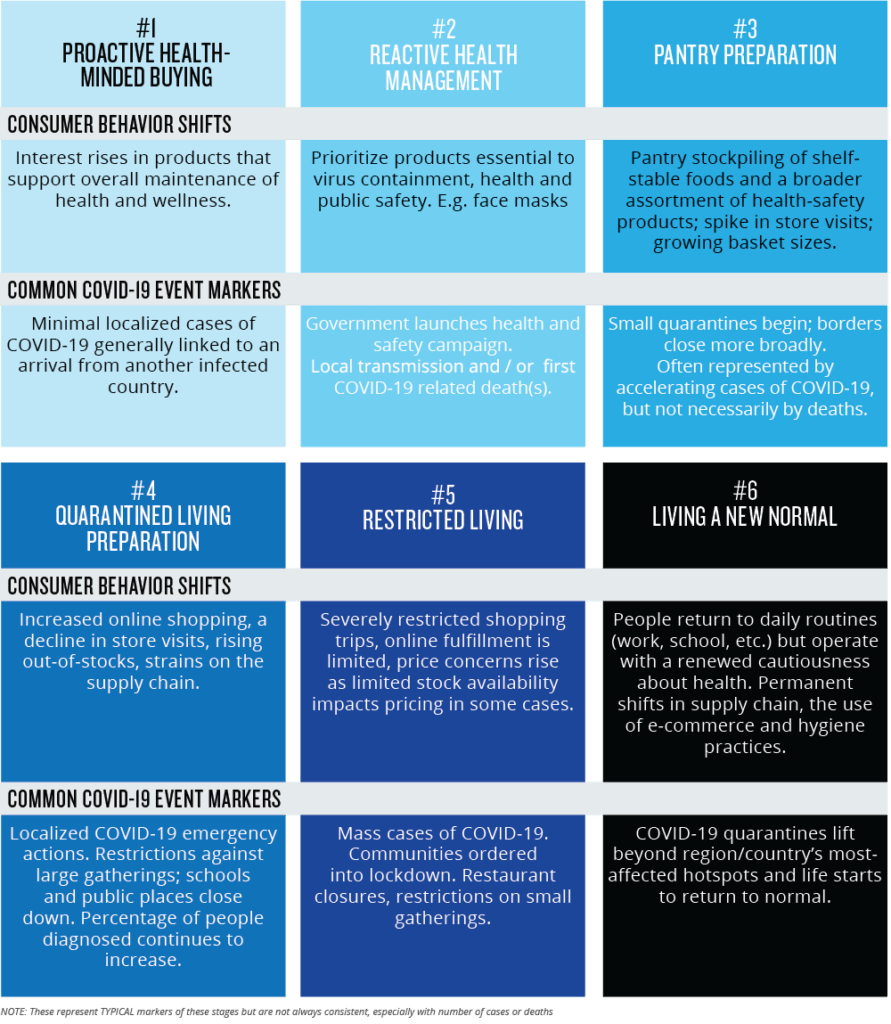
Nielsen Report

If we would go carefully through all behavioral sats we can see most of the developed and emerging economies have already gone through the first three levels.

And Consumer behavior patterns across the next three levels are now on the beginning stage to take shape as sustained global stay-at-home periods are extending regularly with new changing rules.

Levels 4, 5, and 6 are about the new demand signals across demographics and how to respond proactively for each opportunity.

Overall, to keep a firm pulse on your customers’ needs and expectations, you need to personalize the entire customer experiences by delivering the needful values at every stage of an individual session.

In a report by mcKinsey, it has discovered that the consumer sentiments were changing since post-Covid. Consumers have started to put less emphasis on brand loyalty and are opting to focus more on getting value for money.

With the eCommerce personalisation strategies effective in retaining customers, along with increasing sales efforts, the reluctance  to implement personalization can be costly.

To make an effective and successful implementation to combat these unprecedented times, re-imagine the growth on post COVID19 stage and most importantly deliver the customer delight – here I have mentioned the 8 actionable steps that can help you with:

1. Analyze The Customer Data To With New Actionable Insights:

As an e-commerce brand, you need to consider what worked for your business until February 2020. That is unlikely to shape your future customer and revenue growth engine.

So, make a deep-dive on gathering and unifying the right customer data.

Build and gather a 360-degree view of all individual customers based on their demographic, geolocation, behavioral, and device-related data points.

Slice-and-dice each data insights to gather new actionable insights on evolving the current consumer behavior trends.

In a study it was found that 76% of respondents said the real- time behavioral data  is a popular option to grow website personalisation. Real-time behavioral segmentation is generated through in-session behaviors. 

The sessions however refers to the specific user’s action performed in a page during a particular period of time, such as page load or button clicks.
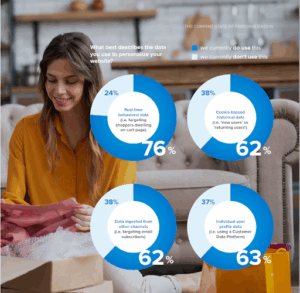
(Source: Linnworks.com)

You may uncover the high engagement and conversion rates for the customer segments which were scored lowly on the ROI parameters or on the value of the purchase.

For Special Instance:

With staying indoors and without access to any physical grocery stores or pharmacies; many people including senior citizens have taken to ordering items of their need over online websites and apps.

This will bring an outlier customer segment into your eCommerce website and you need to put a sharp focus during the current COVID-19 crisis.

These new customer segments open up new engagement to increase ROI and retention in the long-run through.
But, don’t allow these insights to be reported as decision-making.

You have to dig deeper to identify and categorize consumption trends – relevant to your e-commerce platform – into the following buckets:

  • Temporarily postponed: This includes high ticket-value items such as apparel, electronic gadgets, footwear etc.
  • Accelerated: This includes daily grocery items, medicines, etc.
  • Disturbed: This includes face-masks, gloves, hand sanitizers, etc.

Categorizing these trends will enable you to make clearer distinctions between what your customers consider as “essentials” and “indulgences”. Remember that these customer perceptions are likely to evolve during this period and once a greater semblance of normalcy returns.

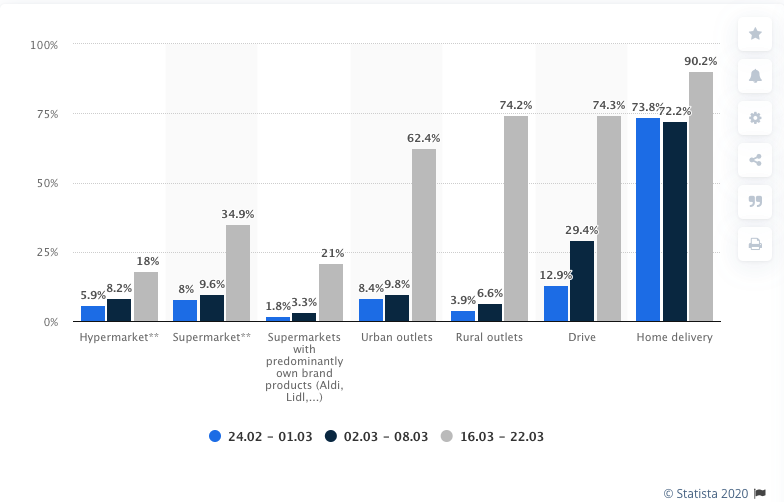
For instance: When the lockdown came into effect in the USA, only 13% of households were ordering food online in the first week. This percentage jumped to 38% by the third week. This highlights the changing attitude of customers towards food delivery from an “essential” to an “indulgence”.

2. Identify New Buyer Personas:

Fact 1: The COVID-19 crisis has reshaped buyer personas that are going to respond differently when the situation begins to normalize.

Fact 2: Based on the value chain in this current scenario, your customers will travel through the following phases towards retention:

buyer personas

After carefully analyzing millions of customer behavioral data points, we’ve identified five key buyer personas that are going to drive demand now:

  • The Captive Buyer:

This type of buyer is reluctant to substitute one product or e-commerce platform with another due to the high cost – in terms of time, effort, and/or money – involved in switching. He/she doesn’t mind postponing purchase based on product availability, last-mile delivery capability, ease and familiarity of platform usage, etc.

  • The Hoarder Or Panic Buyer:

This buyer’s demand is not dictated by the price but by the more primal emotion of fear. He/she is likely to purchase products in bulk – primarily “essentials” such as groceries, healthcare and hygiene items, etc. He/she is also unlikely to spend too much time and effort searching and browsing for products, which is why you need to offer the most relevant product recommendations ASAP.

  • The Price-Conscious Buyer:

This buyer display’s maximum loyalty to the price of the products he/she might be interested in rather than your platform or overall customer experience. He/she will be more attracted to product bundles, offers, and discounts that appeal to his/her spending propensity.

  • The Hesitant Buyer:

This buyer begins with the intention of making a purchase, but is highly likely to postpone or abandon the transaction completely during checkout. You need to give this persona confidence in your platform, customer experience, and last-mile delivery. An omnichannel marketing approach that allows you to orchestrate customer journeys, nudging them to complete the purchase, will go a long way in increasing conversions.

  • The Impulsive Buyer:

This type of buyer makes snap purchase decisions during checkout and is ripe for targeting with relevant cross-sell and upsell product recommendations. This is going to help you increase your average order value per conversion.

3. Personalize The Navigational Flow Across Your Website Or The Mobile App:

Fact: It doesn’t matter if your e-commerce website has the greatest looking Home Page or the most visually pleasing app UI/UX anymore. You need to do more. Your customers are unique individuals, so showing the same website or mobile app to both first-time visitors and repeat customers won’t work anymore!

Leverage your customer’s browsing behavior and order history to customize how you want them to navigate across your website. The more customized your navigational journey, the higher the chances of you directing them towards a purchase – faster.

You can also experiment with dynamic website elements such as graphics, banner images, and CTAs to optimize the persona-based viewing and navigation experience.

For instance: You can personalize the Home Page viewing and navigation flow across your e-commerce platform depending on whether a new visitor (or an unregistered app user) or a repeat registered customer lands on your website or launches your mobile app.

4. Strategically Leverage AI-driven Live Product Recommendations:

Fact: When your customers are active on your website or mobile app, you need to shorten their paths to conversion by giving them product recommendations that are tailor-made to each one of them. And, if you have a large product catalog, then you need AI to do all the heavy lifting, in real-time.

Our AI engine – Raman – enables you to show the most relevant product recommendations across your Home Page, Product Display Page, and Product Listing Page.

For instance: To better cater to your new buyer personas and customer segments, you need to deploy AI algorithms that learn from their actions and inactions in real-time to deliver contextual product recommendations on your website or mobile app.

The AI engine learns intuitively and can eventually predict with a great degree of accuracy what an individual user is most likely to click on, add-to-cart, and purchase.

5. Curate A Personalized Virtual Storefront:

Fact: Directing your customers to what they want has to be a relentless pursuit, as part of your larger personalization strategy.

You can climb higher up the personalization mountain by creating a virtual storefront for individual customers. Not only should this contain product recommendations with the highest probability of purchase, it would also continue to get dynamically refreshed based on customer eyeball data.

This means that this specially curated list of products would account for those recommendations that work and those that don’t and refresh automatically – based on how many seconds a customer spends hovering over an item. These time-stamped signals loop back into our AI engine, making it smarter, with every interaction that a customer has with your platform.

6. Deliver Predictive Product Recommendations Across Channels:

Fact: Your AI-led personalization strategy has to extend across multiple channels and devices, even when your customer is inactive on your e-commerce website or mobile app. Well-timed 1:1 customer engagement across digital touchpoints increases the probability of conversions – exponentially.
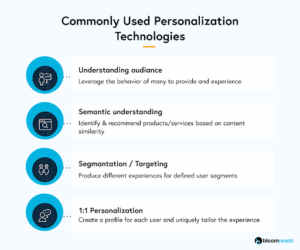
Deliver Predictive Product Recommendations Across Channels(Source: Bloomreach)

With Smartech, you can now trigger laser-focused product recommendations across high-impact channels such as email, app push notifications, and web messages.

Here is the kind of contextual recommendations that you can deliver to pursue conversions beyond just your website or the mobile app:

  • “Suggested for You” Recommendations: These are the best possible recommendations tailored to individual customers based on their general historical behavior; i.e. product/product categories viewed, items added to cart, purchase, etc.
  • “Cart Abandonment Recommendations: These are generated based on the products added to individual customers’ digital shopping carts where the customer may have dropped-off or not completed a purchase
  • Buying Pattern Recommendations: These are generated based on individual customers’ most recent product purchases

For instance: If you identify a customer segment that has repeatedly purchased Instant Noodles within the Dry Grocery category and is out of stock due to a demand surge – you can trigger personalized email recommendations updating this segment when the product is back in stock

  • Viewing Pattern Recommendations: These are triggered based on individual customers’ most recent products or product categories viewed
  • Bestselling Recommendations: These are generated based on the highest selling products on your website or mobile app. These are products that are being purchased the most when compared to other products over a period of time

For instance: In the current scenario, health safety and hygiene products such as facemasks, disinfectants, and hand sanitizers have quickly become best selling products – over the last 2 months – and will see a steady demand even when the lockdown period is relaxed.

  • Trending Recommendations: These are generated based on the most trending products on your website or mobile app. Essentially, these are products whose consumption has shown a percentage increase over a period of time.

For instance: Building on the above example, health safety, and hygiene products like facemasks rapidly became a trending product within its category and very soon emerged as a bestselling product, as the COVID-19 turned into a pandemic.

  • Recently Viewed Recommendations: These are generated based on the most common products that have been recently viewed by individual customers on your platform
  • “New Arrival” Recommendations: These are generated based on the new products that have been added to your product catalog. Our AI engine maps these products to the ones that are most relevant to individual customers and hit upon the ideal recommendations, capable of nudging him/her towards an eventual purchase

Depending upon what channels of customer engagement are working best for which customer segments and buyer personas, you can optimize your multi-channel mix as well as the send-times for these campaigns.

Not only do your recommendations have to be personalized, but they also need to be delivered on the right channel and at the right time. And, our AI engine facilitates all of this.

7. Harness AI-led Product Recommendations To Manage Your Inventory Effectively:

Fact: Your marketing efforts and inventory management have to go hand-in-hand to increase consumption while driving down overhead costs associated with surplus inventory.

The current COVID-19 situation would have fuelled greater demand for certain products while completely eroding demand for other items in your product catalog.

So, don’t just rely on “Bestselling” or “Trending” product recommendations to drive conversions, also account for other products – similar or otherwise – that you can suggest to ease the pressure on your built-up inventory.

Incentivize purchase with attractive discounts, offers, and combo deals. It’s a subtle balancing act and operational trade-off, but an aspect of your marketing strategy that requires urgent attention.

8. Deliver The Best-Possible End-To-End Customer Experience:

Fact: Customer satisfaction is a function of delivering seamless, reliable, and consistent customer experiences over a long period of time.

While AI-led product recommendations will open up relevance-backed conversion opportunities across customer segments and buyer personas, you still need to get other elements of your value chain just right, such as:

  • Seamless website or mobile app UI/UX
  • Fool-proof virtual payment gateways and flexible modes of payment
  • Sturdy packaging
  • Reliable in-time last-mile delivery
  • Provision for new-age package collection; eg: contactless delivery

The new rules of e-commerce marketing are already in play. But, relentless focus on the holistic customer experience – backed by personalization – can go a long way in bending those rules in your favor.

Personalization A Key Tool In The Post-Pandemic Ecommerce Landscape:

As more and more people are facing huge problems due to the pandemic, the one thing shoppers want to feel certain is purchasing.

Shoppers want to ensure they are purchasing the right product from the right brand with the right prices and this is taken into consideration as a person and not as a sales figure.

I’ve worked with the team at Andolasoft on multiple websites. They are professional, responsive, & easy to work with. I’ve had great experiences & would recommend their services to anyone.

Ruthie Miller, Sr. Mktg. Specialist

Salesforce, Houston, Texas

LEARN MORE

In this period of time, personalization has become a vital tool in the ecommerce market. As it enables the customers to feel through their needs, wants and fears which are taken into consideration and it is not being recognized on a valued, individual level.

Conclusion:

Omnichannel personalisation helps the ecommerce brand to unlock the growth in the revenue and waves the user.

Customer data and AI enables you to fulfill the demands, new conversion opportunities, and it turns the newly identified focus customers segments into loyalists.

Andolasoft eCommerce Development & Personalization service can help your e-commerce brand unlock new waves of the user and revenue growth for the remainder of 2020 and beyond.

While customer data and AI will enable you to fulfill latent demand, tap into new conversion opportunities, and turn newly identified focus customer segments into loyalists – don’t be a hard-sell!

At such a time, you need to position yourself as a situation-aware, empathetic, and customer-centric brand. And, not come across as a tone-deaf, opportunistic, and ROI-focused brand.

If you want to develop your eCommerce website, you can connect to us. Our dedicated developers hold many experience in developing eCommerce websites.

How eCommerce Helps To Overcome Businesses From Covid-19

The outbreak of the coronavirus disease has disrupted the lives of the people around the world. And the global cases of this pandemic have surpassed the 2 million mark.

And due to this, it has impacted many business sectors and affected the economy of many countries. This is because people are advised to maintain social distance and stay at home.

Since the official announcement from WHO declaring the COVID-19 a global pandemic, many countries have put restrictions and lockdowns.

This has left businesses to work from home, which is possible for IT and eCommerce companies. It is the only option business owners have and has put eCommerce in to pressure to maintain social distancing.

Due to its fast spread, the shops are closed down since the end of the mid-February month, which has left people to shop from eCommerce stores.

So, this has suddenly spiked the number of orders coming to eCommerce stores exponentially. The behavior of online shoppers has changed as well.

Ecommerce sectors like grocery, food, health care, and entertainment websites have seen a spike in traffic.

Never miss an update from us. Join 10,000+ marketers and leaders.

“ECommerce sales have increased by 52% YOY.  Also, the number of shoppers has been increased by 8.8%. Alternatively, the travel and airline sectors along with other sectors such as apparel, sports goods, arts and crafts, toys, and other eCommerce sectors have been suffering due to this pandemic.”

eCommerce Increased Sale

Source: Statista-2020

In the time of crisis, the big question emerges is how the eCommerce sector could help to overcome all of this?

Well, we have got some tips on how business owners would overcome this crisis with minimum effects on their eCommerce business.

eCommerce, How Small Businesses Can Get Most of It?

This is the most suitable situation and has presented a great opportunity for small business owners to go digital and benefit eCommerce business.

Due to social distancing, the closure of small and large retail shops has significantly affected the revenue of their business negatively.

But with certain and wise investments, they can recall their business digitally. With a smart eCommerce Development Strategy, they can increase their sales and generate some revenue from their business.

There might be some challenges due to ongoing supply chain disruption and delays in delivery, which may affect your business reputation and customer loyalty at the very beginning stages.

But as the situation has been changing continuously, these issues can be dealt with on a rolling basis.

The eCommerce Ideas That could help businesses to overcome the impact of COVID-19

The business owners may take a few steps right away, monitor the situation from the ground, and see what’s possible.

  • Make a round-up of your inventory because the supply chain can be disrupted at any time
  • Know the rules, regulations, and laws applicable to businesses nationally and locally
  • Prepare a team for solving any queries of customers
  • Expand the supply base so that your business doesn’t have to rely on one supplier

Well, these are basic strategies to follow before switching to eCommerce. Now let’s deep dive into the selling niche. Just like;

Sell Digita/ Virtual Products

People all around the world are bound to stay at home due to the fast spread of this disease. Also, most countries have put down restrictions for people to come out, which leaves you to sell virtual digital products on your eCommerce store. And the best thing is that you don’t have to rely on the supply chain.

You can come up with ideas on how to effectively sell them. Because there is no fear of selling virtual products as there will be no in-person contact and products will get delivered online. 

Come up with ebooks, tutorials, e-classes, music classes, learning classes, etc. virtual products that sell like a charm.

Andolasoft has come-up with the idea that could help both buyer and merchant to fulfill their daily requirements such as;

Grocery App

There’s a growing demand for online grocery delivery. The grocery industry is huge by all measures and is constantly developing. Grocery delivery systems and grocery startups making on-demand delivery arrangements have been regularly popping up, and some of them have managed to become tremendously successful. The feature includes:

  • A customer creates a list of groceries and pays instantly.
  • A personal shopper gets this order and collects the groceries.
  • The shopper pays the bill via an Instacart prepaid debit card.
  • The shopper delivers these products to the customer.

Make the Pre-Order and Let’s See How it Works

Salon App

Taking advantage of customers with web app form to book appointments in the salon not only shows that you are ready for the next and the next trends, but also offers them what they need: a technology available to make life easier and easier.

And with no certainty about the length of the quarantine period, your customers would not wish to go a long time without their timely haircuts and beauty treatments. You can capitalize on this by providing on-demand salon services to your customers through a salon app.

The features are included:

  • Pre-Reservations
  • Quick Glance at the Services Available
  • Special Offers
  • Style Libraries
  • Haircut of the Week
  • Appointment Reminders
  • Updo of the Week

Make the Pre-Order and Let’s See How it Works

Come up with a cost-effective shipping method.

People are mostly staying at home, and most of the people have little money to spend on important items. So, allow people to order products online and pick it up from the store.

This way they don’t have to pay much for shipping charges and save their money to spend on important items.

Also, you need to manage your orders during this situation. And to do that you have to heavily rely on the supply chain to ship orders with proper management of logistics. Therefore, ordering online and picking up in-store models works best in this scenario.

Try to Revive the Supply Chain for Your Business:

In these hard times, the supply chain is getting disrupted due to the restrictions and lockdowns put up by most countries.

To revive and restore the supply chain is very important, so alleviate the seriousness of the problem before it gets worse for your business.

Get in touch with manufacturing units and try to expand their operations if possible. And on the other hand, try to build up fulfillment units.

The manufacturing of the goods will take up the most time. But fulfilling orders can be achieved faster, which helps to mitigate the surge of demand.

Sell Human Survival Products

The unfortunate events have unfolded itself, which is threatening the survival of the human race. To help curb the issue, sell essential items that are important for the survival of humans.

Products like grocery, food items, and healthcare items are a necessity in the wake of a global pandemic.

Sell those products at minimum profit margins on your eCommerce store. Because in these trying times people are stranded without much money to spend and without any job to work. And they have little money to spend only on essential items.

So, it will be beneficial for your business as well as the people of your country, if you sell those essential items.

Pro-Tip: 

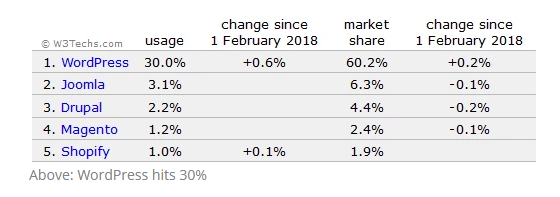
If your eCommerce store is on Magento, then set up a multi-store website with the help of Magento 2 extensions.

I’ve worked with the team at Andolasoft on multiple websites. They are professional, responsive, & easy to work with. I’ve had great experiences & would recommend their services to anyone.

Ruthie Miller, Sr. Mktg. Specialist

Salesforce, Houston, Texas

LEARN MORE

Thus, your current operations do not get affected by this new eCommerce venture. So, all in all, selling these items will keep profits coming in for your online business.

Conclusion

The COVID-19 has affected many people around the globe and disrupted their lives for several weeks now. And there will be after-effects of the same when all of these things are over.

But one thing we can do is to help each other out during this pandemic.

Small businesses are the worst affected by the spread of COVID-19. But you can take the necessary steps to lessen the blow on your business.

Being transparent, optimistic, and positive will help your eCommerce business and the people around you.

Want to launch your eCommerce store? Let’s Discuss!

How To Make Your SaaS Development Idea Successful

With many SaaS companies in the market these days, it’s becoming harder for everyone to stand out from the crowd. That’s why it’s important for any SaaS business to have a well-thought-out development road-map. If you don’t, you’ll do yourself a serious disservice, because a successful SaaS business is built on solid, tested software solutions. Even so, there’s a lot of competition out there. That’s why you have to be extra cautious when thinking about your SaaS development strategy.

The statistics say SaaS has been wiping out the dependency of an enterprise’s old, outdated software to pursue its operations. And the reasons are:

  • Software-as-a-Service has the on-demand usage model with the minimum entry point. Unlike on-premise apps, as z huge upfront costs need to be showered at the time of software updates, customization & other IT-infrastructure related requirements.
  • On SaaS, the end-users don’t have to invest in the total IT-infrastructure setup, as the entire hosting, customer support, and hardware & software implementation process are taken care of by the SaaS vendors itself.
  • The elements inside these cloud offerings can be easily scaled up & down by doing changes with few clicks or adjustments from the data centers and with certain cost allocation, whereas if the investments are done on the on-premise infrastructure, the cost & load would be comparatively heavy.

By the end of this year , 80%-90% of businesses will run their core operations over the Software-as-a-service model. It’s because this software helps to continue with complicated tasks without putting a load on hardware memory, run from anywhere via an internet connection, purchased on a subscription basis, leaves the technical glitches & upgrades part with the providers only.

Never miss an update from us. Join 10,000+ marketers and leaders.

That means software-as-service is here to stay and those who are on a lookout to become a SaaS application development provider, they need to be mindful of the pitfalls of software-as-a-service development and come up with practices & measures that can help them stay afloat & reap home the desired revenue figures.

Don’t know these pitfalls or measures that can help you become a top-notch SaaS app development services provider?

Worry not, the following has all the answers that Infoxen believes will be of sheer help to you.

1. Know Your Client-Base First

Knowing the target audience is very important before starting the software-as-a-service-based development business – as based on that only you will prepare your acquisition & pricing strategy.

A complete list covering buyer persona in terms of his behavior, business type, profession, motivation, passion, demographics will help you march towards the path where you can easily identify “type of product or service they are looking for”.

Know Your Client-Base First

By interviewing such elements or your potential clients, you can plan to create an MVP (Minimum Viable Product) first, as such products will always have scope for further enhancements & will always invite users to put-in their thoughts & functionalities within it.

You can develop as many product packages based on every different buyer persona to gain a competitive edge.

2. Choosing A Pricing Model That Compliments Your End-Users Requirement

On a broader level, there are 3 types of pricing models for extending software-as-a-service solutions that you can choose from-Usage-based pricing, flat-rate pricing & Tiered pricing. Let’s extend these terms to get their better understanding:

  • Usage-Based Pricing:

It’s the most common pricing model where users pay the fees each time they use storage, data or make transactions. As a development company, you can opt for this type of pricing model for your clients who have a small startup or financial base and cannot afford to pay extensively at one go.

  • Flat-Rate Pricing:

It’s the basic pricing model where only a single software-as-a-service product, with a particular set of features under one pay, is made available to the end-users. Here a predetermined subscription fee is charged from the client’s pocket. As a SaaS application development service provider, you can go ahead with this model if your end-users are comfortable at paying hassle-free all at once rather than after utilizing the services.

  • Tiered Pricing:

Here a variety of software-as-service packages at different cost plans, features & functionalities are circulated for different clients’ requirements. This model is great to have on-board if your company wants to target buyers of multiple personas & requirements single-handedly.

You can choose any of the above pricing models based on your client behavior, buying pattern & growth opportunities.

3. Keep User-Experience & Customer Satisfaction Mainstreamed

To start on a good note as a SaaS development company, make sure the user-experience & customer satisfaction you deliver to your clients is top-notch. Be precise & careful while developing your first software, choose the UX elements carefully.

Keep User-Experience & Customer Satisfaction Mainstreamed

Here is how you can add on to your Customer Satisfaction:

  • Be transparent with your customers, timely update them with every module, and ask them for necessary suggestions to ensure project success. Along with it, find the best solutions to treat lacking areas before final deployment. Since every development will be parsed through agile methodology, it will be easy to iterate fast & make the fixes asap.
  • To give your clients the hang of your developed software, draft some welcome emails, tutorial guides, or allot a personal assistant to guide through the functionality of developed products from your end.
  • There is no such thing as over-communication. You can strengthen your bond with your clients by always keeping them in the loop, questioning their requirements, gathering their feedback to foster a better product development environment & customer experiences.

4. Deploying SaaS-Specific Marketing Practices

Software-as-a-service solutions since they have no physical traces and changes constantly need special attention when it comes to their marketing. Although, if SaaS products are carefully architected & render top-notch services, there lies no need for marketing tactics, much.

But if the product has just started on hit & trial methods and demands huge penetration in the market on the initial levels, these all things for you as SaaS application development providers can do to gain better traction with your prospects:

  • Give your customers free trials to let them vibe with the product & get the better tuning with it until they don’t start paying for it.
  • Shoot a series of blog posts in the software-as-a-service community, defining your business stories and how you craft products suiting to every project requirement.
  • Reward a customer if he/she suggests you or refer your SaaS app development services by inundating some reward programs.

5. Preparing For Third-Party Integrations Way Before The Software Development

Since SaaS applications work on a cloud network, their integration with data centers & other third-party platforms has to be secure, effortless & quick. A SaaS development company here has to be well-equipped with third-party integration strategies way before they commence with the development phase. Here is how you can go ahead:

  • SaaS applications must have great data synchronization with different third-party channels. For instance, if the app targets the travel tech industry, the integration with accommodation options like Airbnb could be considered.
  • Consider developing a platform that makes your end-users life easier by enabling them to work with PDF files, ZIP files archives to streamline data import.
  • Create a browser extension of your product to let users have your product in hand all the time. For instance, popular app Grammarly has a web extension that allows users to integrate it with already in use applications.
  • Decide the payment integration option that users prefer and are safest in all accord.
  • To achieve great user coverage, integrate your product or software with SDK tools of framework like Microsoft (as it’s vastly used for enterprise suites).

6. Render Software With Possible Offline Mode Support

Downtime of the app or unstable Wi-Fi can take a toll on anyone, especially when the important task is in process.

International Data Corporation compiled a stat that “for the fortune 1000 companies, the average cost they had to bear after their unplanned application downtime was ranging between $1.25 – $2.5 per year”.

No matter the enterprises operate via software-as-a-service applications, one downtime or poor-connectivity can lead to unsubscription of such software.

Extend support of offline accessibility as a SaaS application development services provider:

  • Make provision for the information or data to store even in the offline mode, as soon as the connectivity restores, data should be able to sync well.
  • Make a feature of “download files” (to let users download important files) when situations like downtime come unannounced.
  • Make an automated/manual update function to help with the syncing of data or documents when a proper connection is available.

7. Bring Aboard A “Customer Success Management” Department

“Customer success is not about support or being reactive – it’s always about being proactive.”

Having a customer success management department will act as a link between “where the sales happen” & the “product’s functionality” – which will help to evaluate your customer’s actual health by using mixes of usage data, contextual inputs, marketing, sales & customer support strategies.

The advent of such will evoke the users to share their true stories behind the usage of such software or product, which will eventually help to drive more cross-sells.

This is how you can funnel your CSM or Customer Success, and Management team:

  • Customer success management (CSM) team should be collaborative with the other organizational teams be it sales, product or marketing as it will help in sketching & resolving customer issues from all ground levels.
  • “Users love when they are served beyond their expectations”, the job role of your CSM team shouldn’t restrict to just delivering what users are expecting but it should race beyond the delivered promises as well. Your team can go the extra mile by preparing product based on different users & their traits, arrange some webinars or seminars to educate your product scope, or shoot a support mail even after delivering the product maybe with a message “Hey, how are you doing with the software we developed for you”.
  • Be on tips with the consumer metrics, these metrics can be in terms of – when & how soon the user is willing to upgrade to high-subscription plans, or how much they are liking the product/software that they are ready to prefer it to a friend or inside their circle.

8. Keep Your Analytics Handy To Measure The Key Metrics

It’s important to keep the analytics handy to determine the progressing growth of SaaS development services company, as such businesses are prone to suffer losses in the early years of their operation. Losses occur because acquisition costs exceed, sometimes customers pay only after utilizing the product/services, which is why actual revenue comes very late.

Thereby, it becomes immense for such software development businesses to know & understand the key metrics in advance – to know whether their business is scaling up or is turning towards major pitfall.

I’ve worked with the team at Andolasoft on multiple websites. They are professional, responsive, & easy to work with. I’ve had great experiences & would recommend their services to anyone.

Ruthie Miller, Sr. Mktg. Specialist

Salesforce, Houston, Texas

LEARN MORE

To know when to put the breaks on time or know if your company is viable in proceeding ahead, consider the following metrics to measure success:

  • Consider billing date over the booking date to evaluate your revenue flow, as on billing date you get the actual sum flowing into your bank account – this will help you access the true financial health of your company.
  • Evaluate the reason behind the churn rate. Churn rate is a situation where users stop subscribing to a particular service (here it’s SaaS). Calculate the number of churn rates & possible reasons that triggered its advent.
  • Balancing the Customer Acquisition Cost is the cost spent on customers to persuade to buy the product/service. LTV or Lifetime Value is a predicted net profit that is expected from the future relationship with customers. The LTV figures should be 3 times greater than CAC, even if it’s the other way, that should not be continued for a long time as higher CAC value depicts that the company is putting a lot of cost on retaining customers than actually gaining from them.

These were the few metrics that can help to evaluate your business drive & allow you to put in the breaks before you are close to any downhill.

Winding Up!

These were the few ways demonstrating how you can go big with your software-as-service specific development business, the success & profitability of establishing such business lies in how well you are staying in competition and treating your customers with the best possible product ever.

Go the extra mile, beyond delivered promises, know what your customer’s persona is, find what pricing strategy is keeping LTV in action, create your metrics that are visible in your customers’ success, and chalk out several other your side of strategies to funnel your business.

To get basic to extreme support in the preparation of your SaaS-based business model, reach out to Andolasoft Inc, a SaaS application development company, where we consult, develop & deploy the high selling SaaS-based products by following the aforementioned points & hundreds of others (which you will find out on consulting us).

Have a cloud-based app development project to finish? Request for a callback!!!