Retailers today face unpredictable consumer demand, rising costs, and fierce competition across every channel. Traditional reporting methods can’t keep up with rapid shifts in buying behavior and supply chain disruptions. This is where BI for Retail becomes a strategic game changer. It empowers retail leaders with real-time visibility into sales, stock, customers, and profitability — enabling faster and smarter decisions that drive performance.
This guide explains how BI for Retail transforms data into insights that help brands optimize inventory and maximize sales growth.
What is BI for Retail?
BI for Retail refers to the use of business intelligence tools, analytics, and data visualization designed specifically for retail operations. It consolidates data from:
- POS systems
- ERP software
- eCommerce platforms
- CRM systems
- Supply chain tools
→ Giving retailers a single source of truth for accurate, fast decision-making.
Why Retailers Need BI Today
| Retail Challenge | BI for Retail Solution |
| Overstocking or stockouts | Smart demand forecasting & replenishment optimization |
| High inventory carrying costs | Better space utilization & inventory turnover |
| Limited insights into product performance | Real-time SKU profitability |
| Ineffective promotions | Campaign analytics & customer response insights |
| Slow reporting & decision delays | Instant dashboards & automated KPIs |
| Omnichannel visibility issues | Unified analytics across online & offline |
How BI Optimizes Inventory
BI ensures the right products are available at the right place and time — without excess waste.
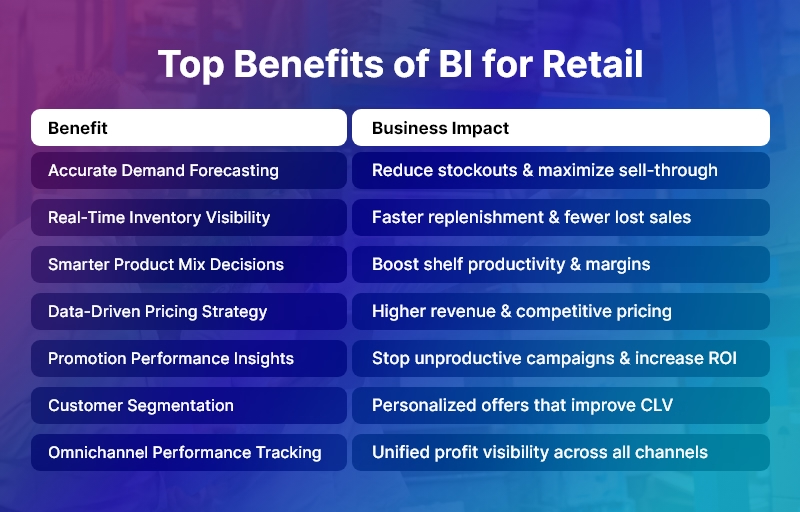
Accurate Demand Forecasting
Predict future sales using:
- Historical demand
- Regional trends
- External factors (weather, holidays)
➡ Lower stock imbalance & higher sell-through rates.
Real-Time Inventory Tracking
Centralized dashboards show exact inventory status across:
- Stores
- Warehouses
- Online channels
➡ Faster replenishment & reduced lost sales.
Safety Stock Optimization
Analytics determine optimal stock buffers to avoid:
- Stockouts
- Rush orders
- Customer dissatisfaction
Supplier Performance Insights
Measure vendor lead time, quality, and delivery reliability.
➡ Fewer delays + stronger procurement strategy.
Shrinkage & Waste Reduction
Retail BI detects:
- Theft & pilferage patterns
- Food/perishable spoilage
- Storage inefficiencies
➡ Better bottom-line performance.
How BI Improves Sales Performance
Smarter Product Mix & Assortment Planning
Analyze:
- Fast/slow movers
- Store-level preferences
- Cross-selling patterns
➡ Improve shelf productivity & margins.
Data-Driven Pricing Optimization
Use real-time pricing intelligence:
- Margin impact
- Competitor pricing
- Customer elasticity
➡ Higher revenue with competitive pricing.
Promotion Analytics
Identify which offers truly drive:
- Sales uplift
- Repeat purchase
- Basket value
➡ Stop spending on unproductive campaigns.
Customer Segmentation & Personalization
BI for Retail leverages RFM scoring to:
- Reward loyal customers
- Target offers precisely
- Increase Customer Lifetime Value (CLV)
Omnichannel Performance Tracking
Bring together:
- eCommerce orders
- Marketplace sales
- Store POS billing
➡ Holistic insight into profitability across channels.
Key Retail KPIs Tracked Through BI
Inventory Metrics
- Sell-through rate
- Inventory turnover ratio
- Days of inventory on hand
- Stockout percentage
Sales Metrics
- Gross margin return on investment (GMROI)
- Basket size & conversion rate
- Promo-driven sale percentage
- Customer retention rate
➡ Retailers can monitor performance in real time.
Systems Integrated with BI
| System | Example Tools |
| POS | Shopify POS, Square, Lightspeed |
| ERP | SAP, Oracle, Tally |
| CRM | Salesforce, HubSpot, Zoho |
| eCommerce Platforms | Shopify, Magento, WooCommerce |
| Supply Chain Mgmt | WMS, delivery analytics |
Integration removes data silos for a unified retail intelligence ecosystem.
AI & Predictive Analytics in BI for Retail
Retail BI uses artificial intelligence to:
- Predict future demand accurately
- Suggest automated stock replenishment
- Forecast the impact of promotions
- Optimize pricing based on trends
- Reduce overstock of declining products
➡ Better decisions with less manual effort.
BI for Multi-Location Retail
| Benefit | Business Impact |
| Store performance benchmarking | Invest where growth is highest |
| Regional demand analysis | Improve stock availability per location |
| Centralized analytics | Consistent business reporting |
| Data-driven store expansion decisions | Maximize ROI |
Scalable intelligence for growth-oriented retail networks.
Short Case Example
A lifestyle retailer used BI for stock optimization:
| Before BI | After BI |
| 22% lost sales due to stockouts | <7% lost sales |
| Overpricing slow-moving stock | Dynamic pricing increased sales |
| Manual, delayed reporting | Real-time dashboards |
Result: 12% revenue growth & increased customer satisfaction
Best Practices for BI for Retail Implementation
| Best Practice | Why It Matters |
| Prioritize clean and standardized data | Accurate insights need reliable data |
| Define KPIs clearly | Focus effort on business outcomes |
| Train teams for daily use | Improve adoption across stores |
| Start with quick wins | Build confidence in BI value |
| Scale to advanced analytics | Predictive insights deliver higher ROI |
Conclusion
Retail success now depends on data-driven agility — not guesswork.
BI for Retail helps brands:
- Optimize inventory levels
- Maximize sales and profitability
- Improve customer satisfaction
- Deliver an efficient omnichannel experience
- Make informed, fast decisions at every level
Retailers that leverage BI for Retail build strong competitive advantages and unlock sustainable growth.
FAQs
How does BI for Retail help reduce stockouts?
It predicts demand and monitors inventory instantly, ensuring timely replenishment.
Can small retail businesses use BI?
Yes — cloud BI offers affordable, easy-to-adopt analytics.
How does BI improve retail profitability?
By optimizing pricing, reducing waste, and maximizing product performance.
What kind of data feeds BI?
POS, ERP, CRM, supply chain, and eCommerce data.
Does BI support omnichannel retail?
Absolutely — it unifies insights across online and in-store experiences.